Stacks & Storage
A card-based strategy activity that provides an opportunity to explore goals, planning, and flexibility.
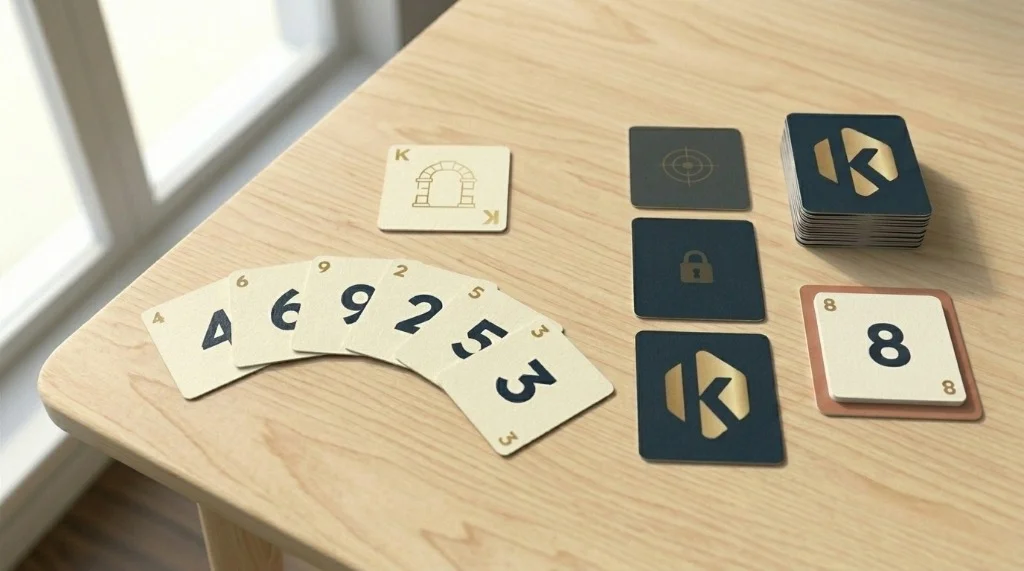
Recommended Use
Best For
Counselors, educators, mentors, youth workers, and parents with youth ages 7+ who may benefit from more visual and tactile explanations for staying focused on tasks and thinking ahead.
Core Focus
A fun, tactile way to practice executive-function skills and create space to adapt when a plan needs to change.
Target Competencies
- Working Memory: holding a goal, a sequence, and relevant available information in mind while considering a next move.
- Inhibitory Control: pausing long enough to consider whether an immediate move serves the larger plan.
- Cognitive Flexibility: adjusting when a new card, an earlier decision, or another player’s move changes what is possible.
- Planning & Organization: considering order, access, and preparation rather than treating each choice as isolated.
- Reflective Problem-Solving: considering what mistakes and successes may reveal for the next try or a future situation.
Founder's Note
Inside the design
We cannot just tell a child to think ahead and plan better; they need opportunities to see what that takes. The future will ask them to make decisions that no game can fully prepare them for, but Stacks & Storage was made to provide a fun starting point for practice, reflection, and conversation.”
Design Rationale
Decision-making often asks several things of a child at once: keep a goal in mind, notice what is available, decide what needs to happen first, and adjust when the plan changes. Stacks & Storage turns those demands into a shared, tactile challenge that makes planning, focus, and flexibility easier to see and discuss.
Its design brings goal maintenance, sequencing, future planning, and adaptation into one repeatable card-game experience. The activity is not an assessment or a stand-in for real-life decisions; it provides a manageable starting point for guided practice, reflection, and conversation.
Get Access
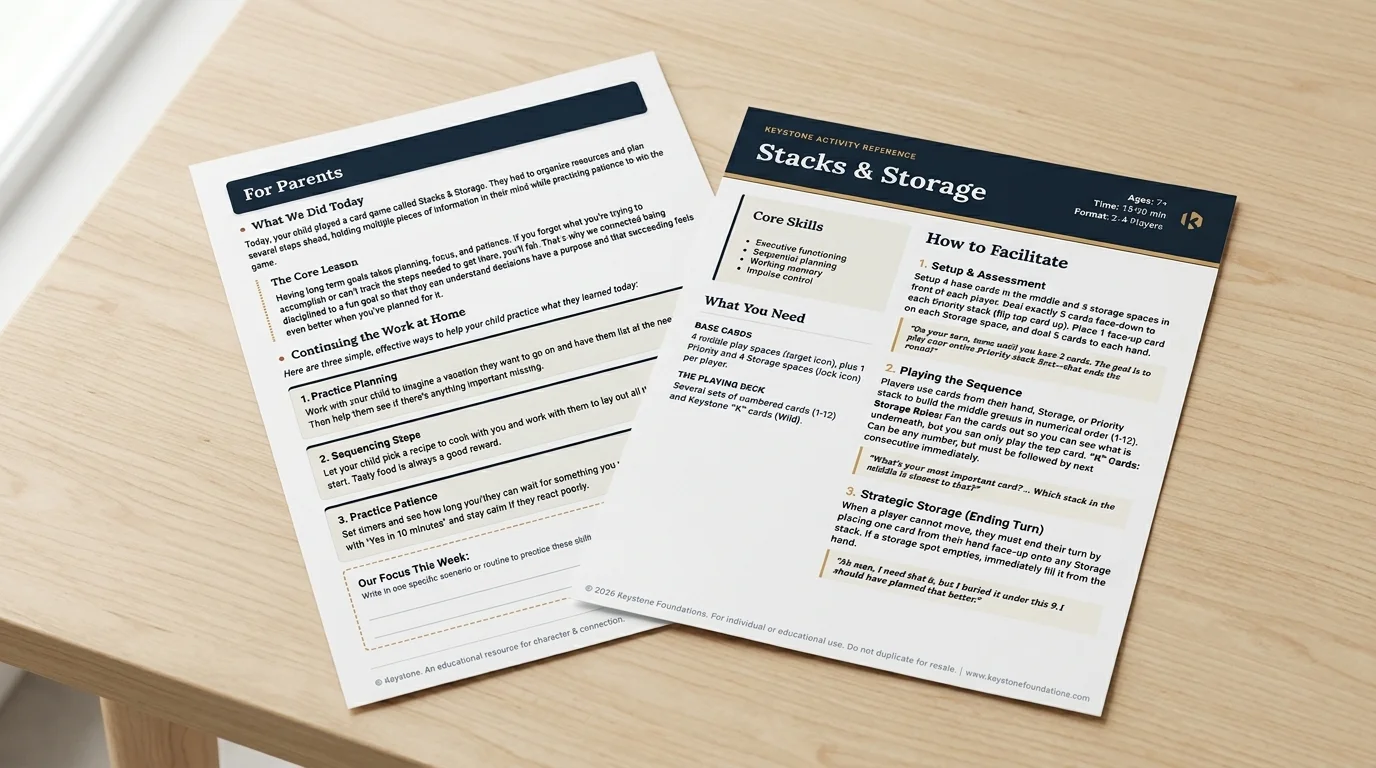
- Facilitator Webguide
- Activity Reference
- Connection at Home Caregiver Extension
- Stacks & Storage Print & Play Pack
Secure payment processing
Included Resources
Your purchase includes the digital resources listed above, with downloadable files available through your account.
Facilitator Feedback
Share What You Notice
Keystone resources continue to develop through real facilitation. If you use one, we would value brief feedback about what opened conversation, what was unclear, and what would make the experience more useful.
Share Feedback