Save the Sheep
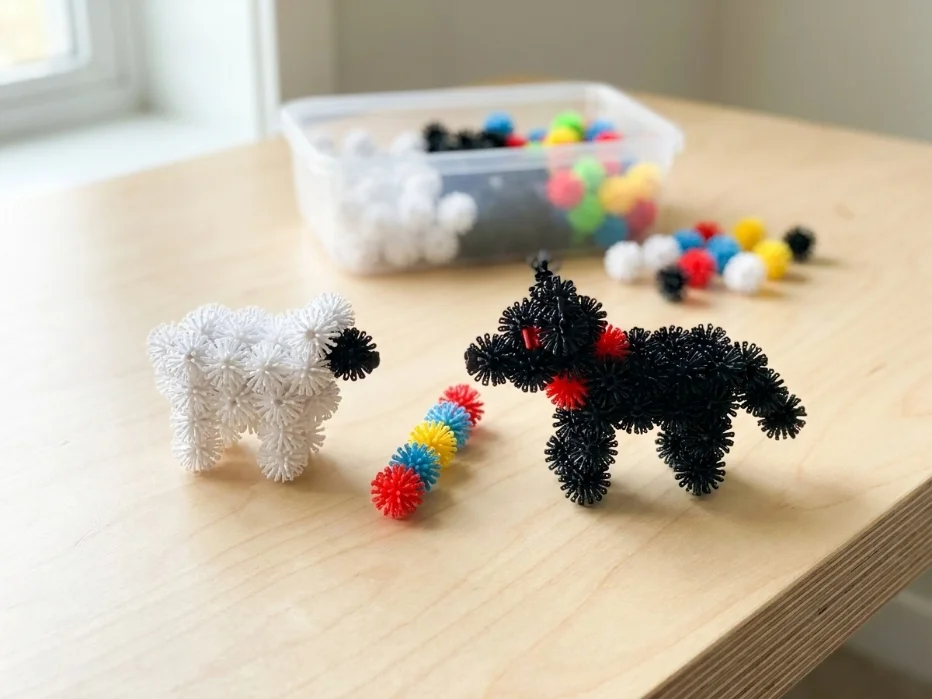
A hands-on creative problem-solving activity for exploring how boundaries can protect, how protection differs from control, and what support may be available.
Recommended Use
Best For
Counselors, educators, youth workers, mentors, and parents facilitating one-to-one conversations with youth ages 6–18. Save the Sheep is most useful when participants can be imaginative and when conversation about boundaries, needs, and supports may feel difficult to navigate.
Core Focus
Creates an opportunity to discuss boundaries, safety, and the challenges that can arise when limits are missing, unclear, or not respected.
Target Competencies
- Boundary Awareness: exploring what boundaries may protect and how limits can affect needs, relationships, space, and freedom.
- Safety Awareness: considering situations or choices that may create vulnerability and what protection may be helpful.
- Perspective-Taking: exploring why a person might set a boundary and how that boundary can feel from different sides.
- Support & Help-Seeking: identifying people, places, and resources that may be helpful when a situation feels too difficult to manage alone.
- Communication & Problem-Solving: talking about gaps, needs, and adjustments without treating difficulty as failure.
- Respect for Boundaries: considering both how to communicate personal limits and how to respond when someone else names one.
Founder's Note
Inside the design
Design Rationale
Boundaries can be hard to discuss when they are only viewed as restrictions. Save the Sheep asks, “Why does that restriction exist?” “What needs protection?” and “Where might support be needed?”
By giving participants responsibility for caring for something vulnerable, the activity turns those questions into a shared, imaginative problem. Building defenses, noticing gaps, considering access to needs, and identifying sources of support give a facilitator and participant concrete language for exploring the tension between protection and control—without treating the activity as a verdict about a person, family, or relationship.
Get Access
- Facilitator Webguide
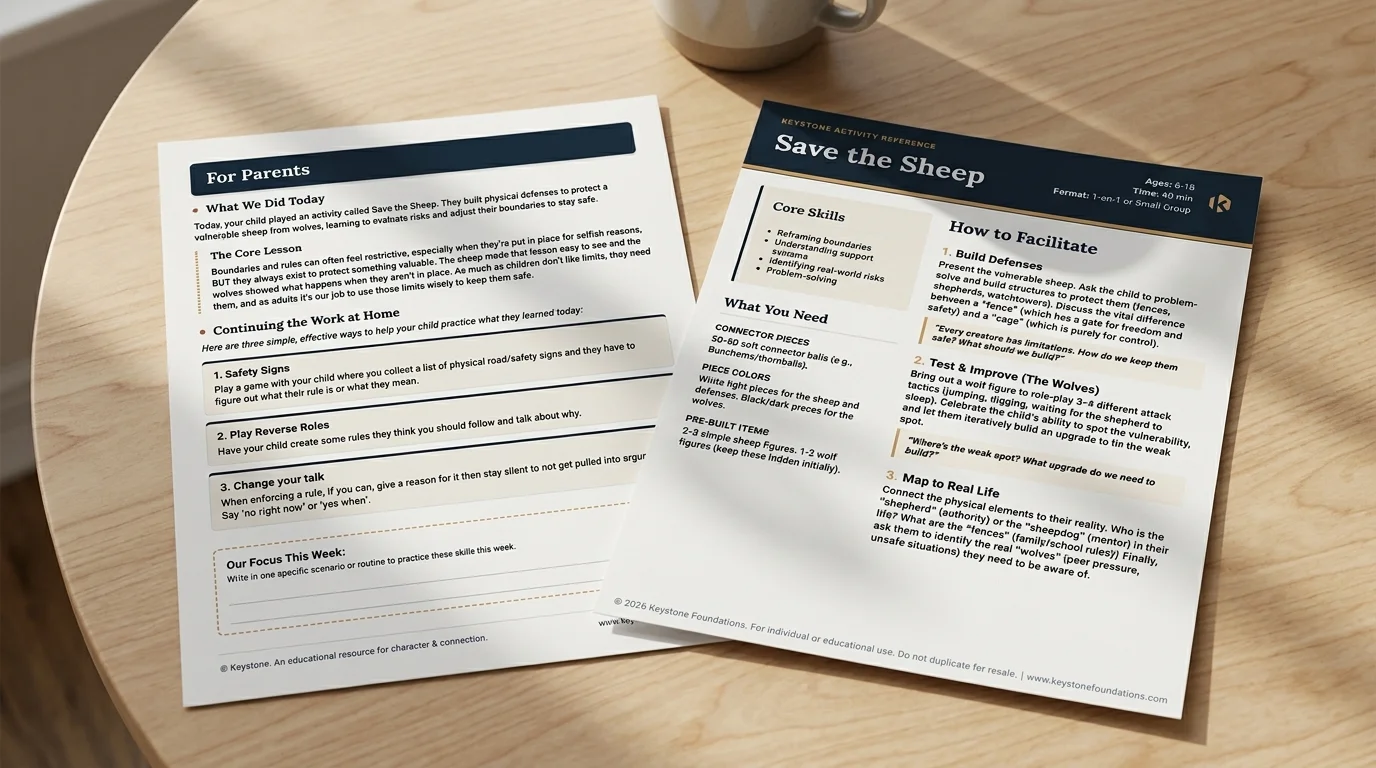
- Activity Reference
- Connection at Home Caregiver Extension
Secure payment processing
Included Resources
Your purchase includes the digital resources listed above, with downloadable files available through your account.
Facilitator Feedback
Share What You Notice
Keystone resources continue to develop through real facilitation. If you use one, we would value brief feedback about what opened conversation, what was unclear, and what would make the experience more useful.
Share Feedback